Don't Buy Until You Read This: Msi Cubi Nuc 1M vs Msi Titan 18 Hx 2025
Introduction
Choosing between an ultra-compact mini PC and a full-sized performance laptop is more than a question of raw power — it's a question of priorities. The Msi Cubi Nuc 1M and the Msi Titan 18 Hx 2025 occupy opposite ends of the personal computing spectrum: one emphasizes size, efficiency, and flexibility as a desktop alternative; the other prioritizes maximum mobile performance, a large display, and desktop-replacement capabilities. This article compares both devices from the perspective of real-world use cases, buyer priorities, and long-term value.
Readers will find a detailed analysis of what each product is built to do, practical strengths and weaknesses, a side-by-side comparison table, and a buying guide that helps match each option to common buyer needs — whether that's a quiet home server, a travel-friendly workstation, or a powerhouse for gaming and content creation.
At a glance: What these products are for
Msi Cubi Nuc 1M is best understood as a compact desktop alternative. It targets buyers who need a small-footprint machine for productivity, media playback, light editing, and low-power server tasks. Its appeal lies in being unobtrusive, energy-efficient, and often more affordable to operate and maintain.
Msi Titan 18 Hx 2025 is a high-end performance laptop designed for gamers, creators, and professionals who need sustained CPU/GPU power on the go. Expect a large display, advanced cooling, and a chassis built to contain and dissipate heat from powerful components; this is a portable desktop replacement rather than a thin-and-light travel companion.
Detailed product review and analysis
Msi Cubi Nuc 1M — compact utility, flexible placement
The Cubi Nuc 1M is aimed at users who prioritize physical space, energy efficiency, and quiet operation. Its design typically revolves around a small chassis that can sit behind a monitor, under a TV, or in a media cabinet. For homes, offices, and small retail setups the Cubi delivers a reliable platform for web browsing, office suites, video conferencing, streaming, point-of-sale software, and light photo editing.
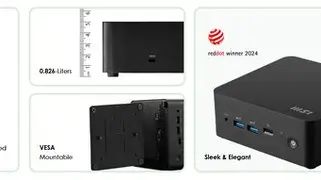
Key practical advantages include low power consumption, near-silent operation, and easy integration into existing setups. Users who want a headless server for backups, home automation, or light virtualization (a handful of containerized services) will appreciate a compact NUC-style device that can run 24/7 without drawing significant power.
Upgradeability is moderate: most mini-PCs of this class support M.2 NVMe storage, a 2.5" drive in some variants, and SODIMM RAM slots. That makes them easy to bump up for longer life without replacing the whole unit. Connectivity generally covers a useful selection of ports — USB-A, USB-C, HDMI or DisplayPort, and an Ethernet jack — enough for peripherals and external storage.
Msi Titan 18 Hx 2025 — desktop-class performance in a portable package
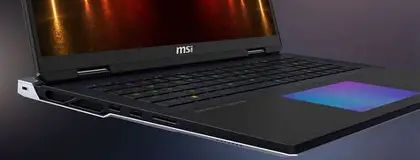
The Titan 18 Hx 2025 is built for people who need heavy lifting: high-frame-rate gaming, multi-hour livestreaming, video rendering, 3D work, and complex simulations or software development workflows that benefit from multi-core CPUs and discrete GPUs. The "18" denotes a large-screen experience, making it a better fit for users who prefer a roomy display for multitasking or creative work.
Thermals and power are central considerations. To extract performance from high-power CPUs and GPUs, the Titan relies on active cooling with multiple heat pipes and fans. That results in higher sustained power draw and audible fan noise under load, but it enables much higher performance than any small desktop alternative in the same price class.
Discover deals on Laptops & Computers — updated daily.
Browse Now →Port selection is designed for peripherals and external displays, and many high-end gaming/workstation laptops include features such as high-refresh displays, G-Sync/FreeSync support, customizable RGB keyboards, and fast wired networking. Battery life is often secondary: buyers should expect that peak performance is best when plugged in.
Pros & cons
Msi Cubi Nuc 1M
- Pros:
- Very small footprint — fits behind monitors or inside compact spaces
- Low power draw and quiet operation for 24/7 use
- Typically easier to maintain and upgrade (RAM, SSD)
- Good fit for media centers, home offices, digital signage, and light server duties
- Lower total cost of ownership compared to high-end laptops
- Cons:
- Not suitable for heavy gaming, intensive video editing, or 3D rendering
- Limited GPU performance — integrated graphics or low-power discrete options
- Port and expansion options are constrained by size
- Not a replacement for mobile computing — requires external display, keyboard, mouse
Msi Titan 18 Hx 2025
- Pros:
- Very high CPU and GPU performance for gaming, creation, and professional workloads
- Large, immersive display ideal for multitasking and content editing
- Robust cooling and power delivery designed to sustain load
- Port selection and feature set aimed at power users (fast networking, multiple display outputs)
- Cons:
- Heavier and bulkier — less convenient for frequent travel
- Higher purchase price and higher power consumption
- Fan noise and heat under load can be noticeable
- Battery life compromises when running at full performance
Side-by-side comparison
| Category | Msi Cubi Nuc 1M | Msi Titan 18 Hx 2025 |
|---|---|---|
| Form factor | Ultra-compact mini PC (desktop-only) | Full-sized performance laptop (portable but heavy) |
| Target user | Home office, HTPC, light server, point-of-sale | Gamers, creators, pros needing portable desktop power |
| Performance | Good for productivity and light multitasking | High-end CPU/GPU performance for sustained workloads |
| GPU | Integrated or low-power discrete options | Discrete high-performance GPU suitable for gaming and rendering |
| Display | Requires external monitor | Large built-in 18" display, often high-refresh |
| Upgradeability | RAM and storage upgrades possible (SODIMM, M.2/2.5") | RAM and storage upgradeable in many models but more limited than desktops |
| Portability | Extremely portable physically — light and small, but not battery-powered | Portable in the laptop sense — heavier to carry long distances |
| Thermals & noise | Low heat and near-silent | High heat under load and audible fans |
| Battery | Not applicable | Available but limited under heavy load |
| Price (relative) | Lower total cost for typical configurations | Higher entry price for top-tier performance |
Real-world use cases and buyer concerns
Buyers often think in terms of tasks rather than specs. Below are typical scenarios and which product suits them better.
Home office / remote work
For reliable video calls, document editing, and multiple browser tabs, the Cubi Nuc 1M is an excellent, unobtrusive choice. It can be tucked away and paired with a monitor and keyboard. The Titan is overkill unless the user regularly runs demanding development environments or needs local GPU acceleration.
Light content work and photo editing
If the workload is occasional cropping, color adjustments, and desktop publishing, a well-configured Cubi can handle it. For heavier photo batches, RAW processing at scale, or video work, the Titan's discrete GPU and stronger CPU cores will significantly speed up tasks.
Gaming and live streaming
The Titan is the clear pick. Its discrete GPU, thermal headroom, and display make it suitable for modern gaming and streaming. The Cubi can serve as a secondary streaming server or a streaming client in a living-room setup, but it's not meant to be a primary gaming platform for AAA titles.
Media center, HTPC, and digital signage
The Cubi excels here — quiet operation, small size, and reliable video playback make it ideal behind a TV or integrated into a cabinet. The Titan is too power-hungry and noisy for a living-room centerpiece.
Workshop, lab, or small server
The Cubi's low power draw and ability to run 24/7 make it suitable for lightweight server duties: network services, backups, home automation hubs, and small-scale virtualization. For heavier compute servers, a desktop or dedicated rack server is more appropriate than either of these machines.
Buying guide: how to choose between them
This section offers a step-by-step checklist and considerations to match product choice with requirements.
1. Define primary use
- If the main tasks are web browsing, office apps, media playback, and small server roles, favor the Cubi.
- If the main tasks include gaming, video rendering, 3D modeling, or heavy development workloads, favor the Titan.
2. Consider mobility vs. permanence
Do you need a machine that travels with you? The Titan can move between locations; the Cubi is a parked device that lives at a fixed desk or entertainment center.
Find top-rated Laptops & Computers products at great prices.
Browse Now →3. Prioritize noise and thermal profile
For quiet spaces (bedrooms, meeting rooms, libraries), the Cubi’s near-silent nature is advantageous. If acceptable to have fan noise under load, or if the device will be used in a dedicated office, the Titan’s fans are a trade-off for performance.
4. Plan for upgradeability and lifecycle
- Check RAM and storage options; both product types often allow upgrades but the Cubi’s SODIMM and M.2 accessibility often make upgrades straightforward and inexpensive.
- For long-term performance needs, a Titan with generous RAM and a high-end GPU will remain capable longer for demanding tasks — but at higher initial cost.
5. Factor in total cost of ownership
Remember electricity costs for a system that runs 24/7, and potential cooling/AC needs for hot environments. The Cubi is cheaper to run; Titan will draw more power and may require more frequent maintenance for thermal paste and fans over many years.
6. Evaluate peripheries and displays
If you already own monitors, keyboards, and mice, the Cubi integrates easily. If you want a ready-to-go large display with high refresh rate for gaming or creative work, the Titan provides that in one package.
7. Warranty, support, and software
Check warranty terms and included support. Laptops often include more immediate support options and feature firmware utilities targeted to gaming and performance tuning; mini-PCs provide a simpler firmware and fewer bundled extras.
Checklist of questions to ask before you buy
- What is the primary workload and will it require sustained CPU/GPU performance?
- How important is portability versus power?
- Do you need a built-in display or will you be using external monitors?
- Is low noise and low power consumption a must for the environment where it will run?
- How much storage and RAM will be needed in 2–4 years, and how easy will upgrades be?
- Does the budget favor a lower initial spend (Cubi) or a higher spend for long-term performance (Titan)?
Final recommendations
Both the Msi Cubi Nuc 1M and the Msi Titan 18 Hx 2025 are excellent within their intended niches. The correct choice hinges on use case:
- Choose the Msi Cubi Nuc 1M if the priority is a small, quiet desktop for productivity, media, light editing, or a low-cost always-on server. It offers convenience, low operating costs, and a small footprint that integrates easily into home and office environments.
- Choose the Msi Titan 18 Hx 2025 if the priority is top-tier mobile performance for gaming, creative work, or professional applications that demand a discrete GPU and strong multi-core CPU. Expect better frame rates, faster renders, and a more immersive display experience — at the cost of weight, noise, and energy use.
Conclusion
There is no universally “better” device between the Msi Cubi Nuc 1M and Msi Titan 18 Hx 2025 — only the device that best matches a buyer's priorities. For someone setting up an unobtrusive, low-cost, energy-efficient workstation or media center, the Cubi is a smart, practical choice. For a user who needs desktop-class performance in a single portable unit and is willing to accept higher power consumption and noise, the Titan is the appropriate investment.
Careful buyers should assess their actual workloads, consider upgrade paths, and think beyond raw specs to how the device will fit into daily life: does it need to be silent at night, travel across cities, or render frames for hours at a time? Answering these practical questions will make the choice clear and ensure satisfaction in the long term.